
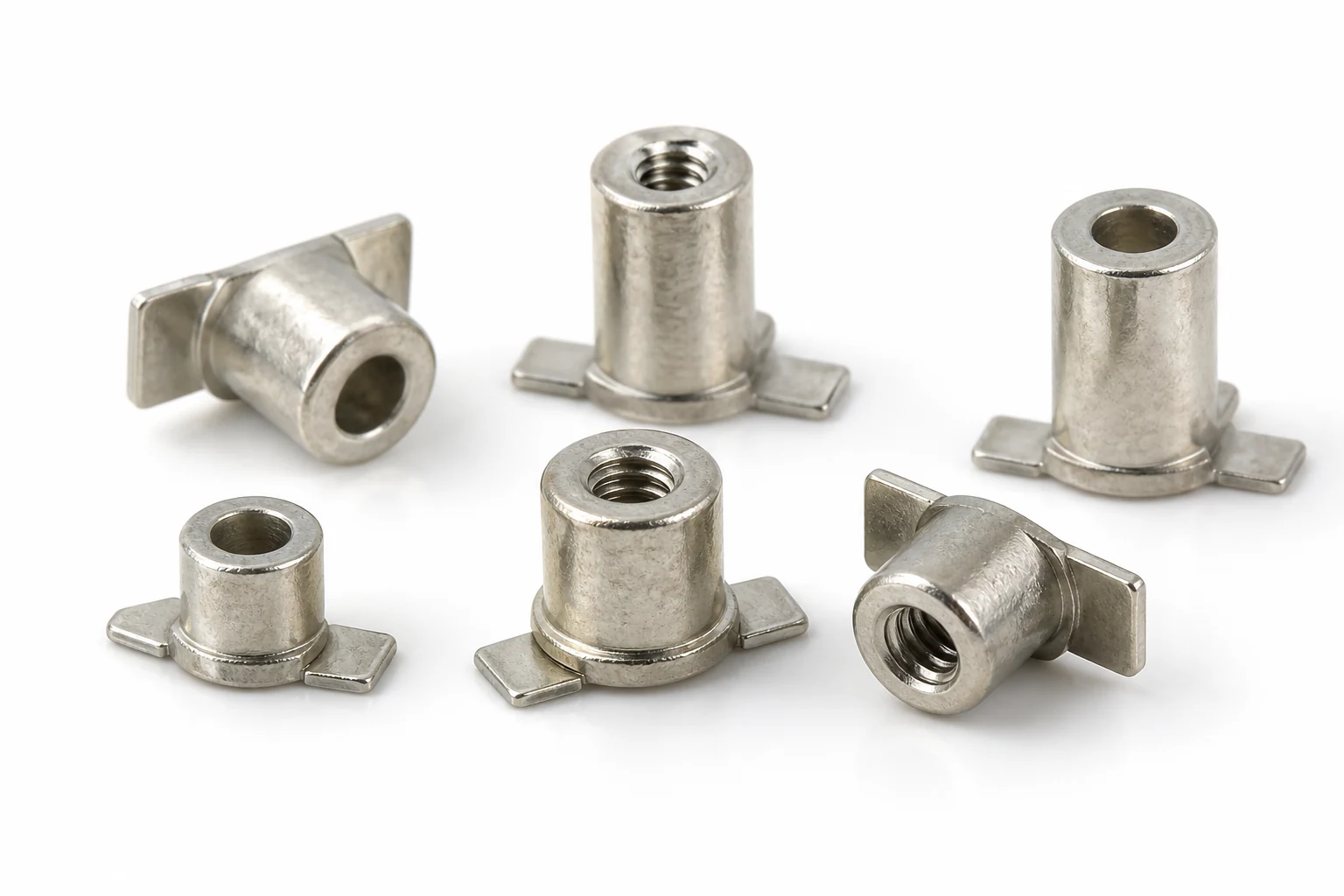
Application guide for Solderable SMT Spacers to Trade series (solderable SMT spacers). The core duty of the type is setting a board-to-board or board-to-chassis gap with a spacer installed during solder assembly. The typical industries, the how-to-specify checklist, assembly practice and the exclusion cases are set out below.
Typical Applications for Solderable SMT Spacers
The most common settings where these are specified:
- PCB assembly: Solderable spacers set a board-to-board or board-to-chassis gap.
- High-volume electronics: Taped-and-reel parts suit automated placement.
- Instrument housings: The M3 threaded version supports a removable board attachment.
- Compact controls: Through-hole versions provide a defined non-threaded passage.
How to Specify Solderable SMT Spacers for Your Application
- Size: Match the size to the mating part — see the dimension table below for each option.
- Material: Choose the material and finish for the service environment — plated steel for general use, stainless for corrosion resistance.
- Environment: For damp, coastal or chemical exposure prefer A4/316 stainless or a suitable coating; indoors, plated steel or A2 is usually sufficient.
- Standard: This product is supplied to Trade series (solderable SMT spacers). Quoting the standard on your order guarantees interchangeable dimensions between suppliers.
Where Solderable SMT Spacers Are Not the Right Choice
Match the fastener to the load, environment and whether the joint must be reopened; the wrong class or style is the usual cause of joint failure.



