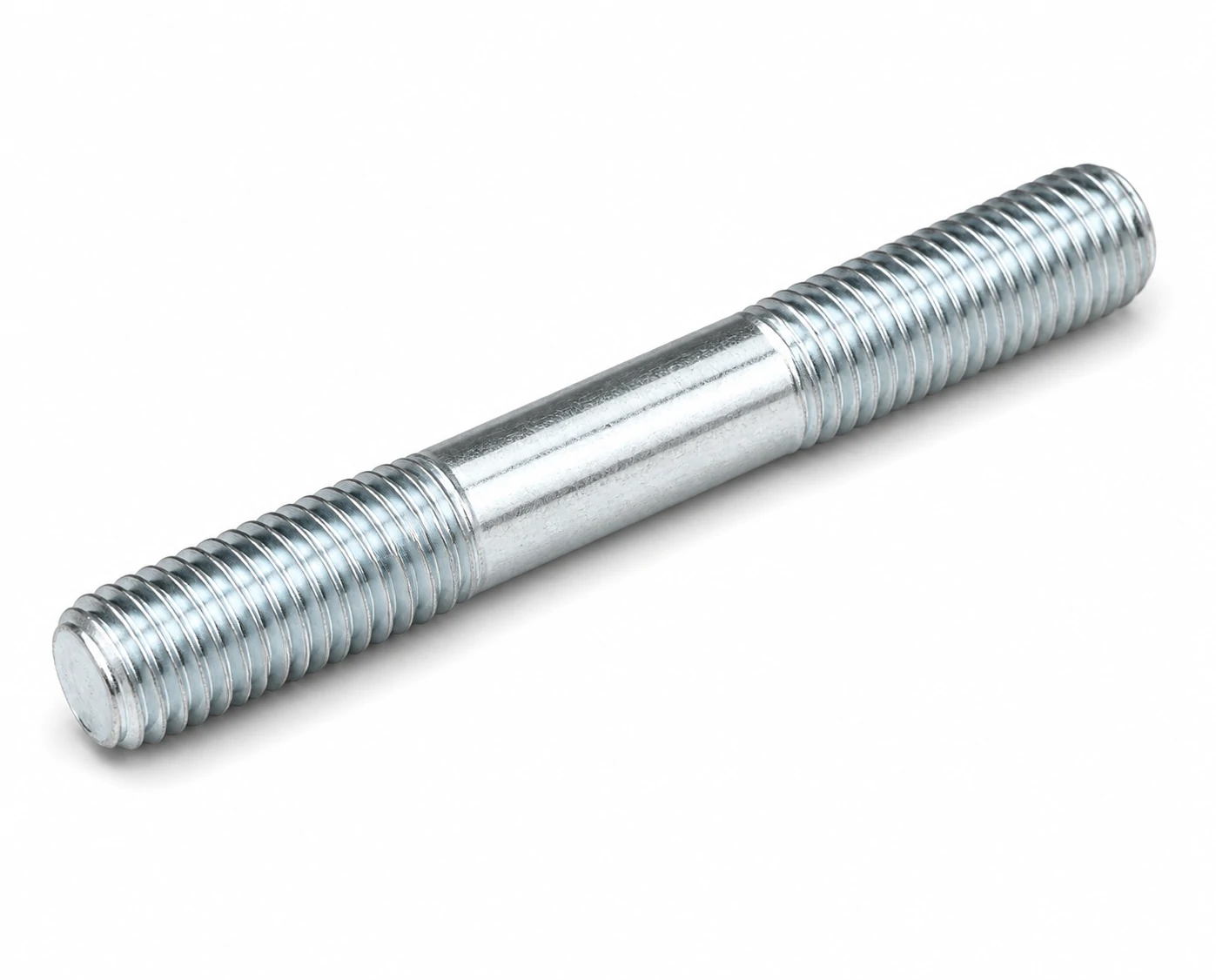
A4 Stainless Steel Double-End Studs (DIN 938 / 939 / 940) combine the dimensional form of DIN 938 with the material properties of grade ISO 3506 group A4 (316 / 1.4401), commonly supplied A4-80: superior, including marine and chloride environments, largely non-magnetic, service range approx. -200 °C to +400 °C, subject to the property class and the joint. This page summarizes the grade data, its corrosion behavior in service, the comparable grades, and the sizes supplied.
Why Choose A4 Stainless Steel for Double-End Studs (DIN 938 / 939 / 940)
Specified for marine, coastal and chemical applications. For double-end studs (din 938 / 939 / 940), this matters when superior, including marine and chloride environments is the primary requirement.
Mechanical & Physical Properties
| Grade designation | ISO 3506 group A4 (316 / 1.4401), commonly supplied A4-80 |
|---|---|
| Magnetic response | Largely non-magnetic |
| Service temperature | approx. -200 °C to +400 °C, subject to the property class and the joint |
| Corrosion characteristic | Superior, including marine and chloride environments |
Galvanic & Galling Considerations
Two important notes for stainless double-end studs (din 938 / 939 / 940): (1) stainless can gall on stainless threads under load — use a thread lubricant or anti-galling compound, especially for M6 and below; (2) when joined to aluminum or galvanized steel, stainless can drive galvanic corrosion of the less-noble metal in wet service — isolate with a coating or sleeve where appropriate.
Comparable Grades
For Double-End Studs (DIN 938 / 939 / 940), the alternative stainless grade is A2 (304). Choose A2 (304) for general use and A4 (316) wherever chlorides are present; the molybdenum in A4 is the whole difference. Remember that stainless is the corrosion answer, not the strength answer — for load, look at class 8.8 or 10.9 instead.
Using Stainless Fasteners in Aluminum
Expect the aluminum to corrode, not the fastener — stainless sits higher in the galvanic series, so the aluminum is the one that gives up material. A small fastener in a thick section spreads the loss over a large area and is usually fine; a large fastener in thin sheet concentrates it and is not. Keep water out of the joint, or isolate the two metals with a nylon or coated washer and a sealant.
Sizes of Double-End Studs (DIN 938 / 939 / 940) Available in A4 Stainless Steel
| Thread size | Metal end bm (mm) | For parent material | Nut end (mm) | Common overall length (mm) | Property class | Reference standard | Sibling standard |
|---|---|---|---|---|---|---|---|
| M8 | 8 | Steel | 8 | 30~80 | 8.8 | DIN 938 | DIN 939 = 10 mm, DIN 940 = 16 mm |
| M10 | 10 | Steel | 10 | 35~100 | 8.8 | DIN 938 | DIN 939 = 12.5 mm, DIN 940 = 20 mm |
| M12 | 12 | Steel | 12 | 40~120 | 8.8 | DIN 938 | DIN 939 = 15 mm, DIN 940 = 24 mm |
| M16 | 16 | Steel | 16 | 50~160 | 8.8 | DIN 938 | DIN 939 = 20 mm, DIN 940 = 32 mm |
| M20 | 20 | Steel | 20 | 60~200 | 8.8 | DIN 938 | DIN 939 = 25 mm, DIN 940 = 40 mm |
| M24 | 24 | Steel | 24 | 70~240 | 8.8 | DIN 938 | DIN 939 = 30 mm, DIN 940 = 48 mm |