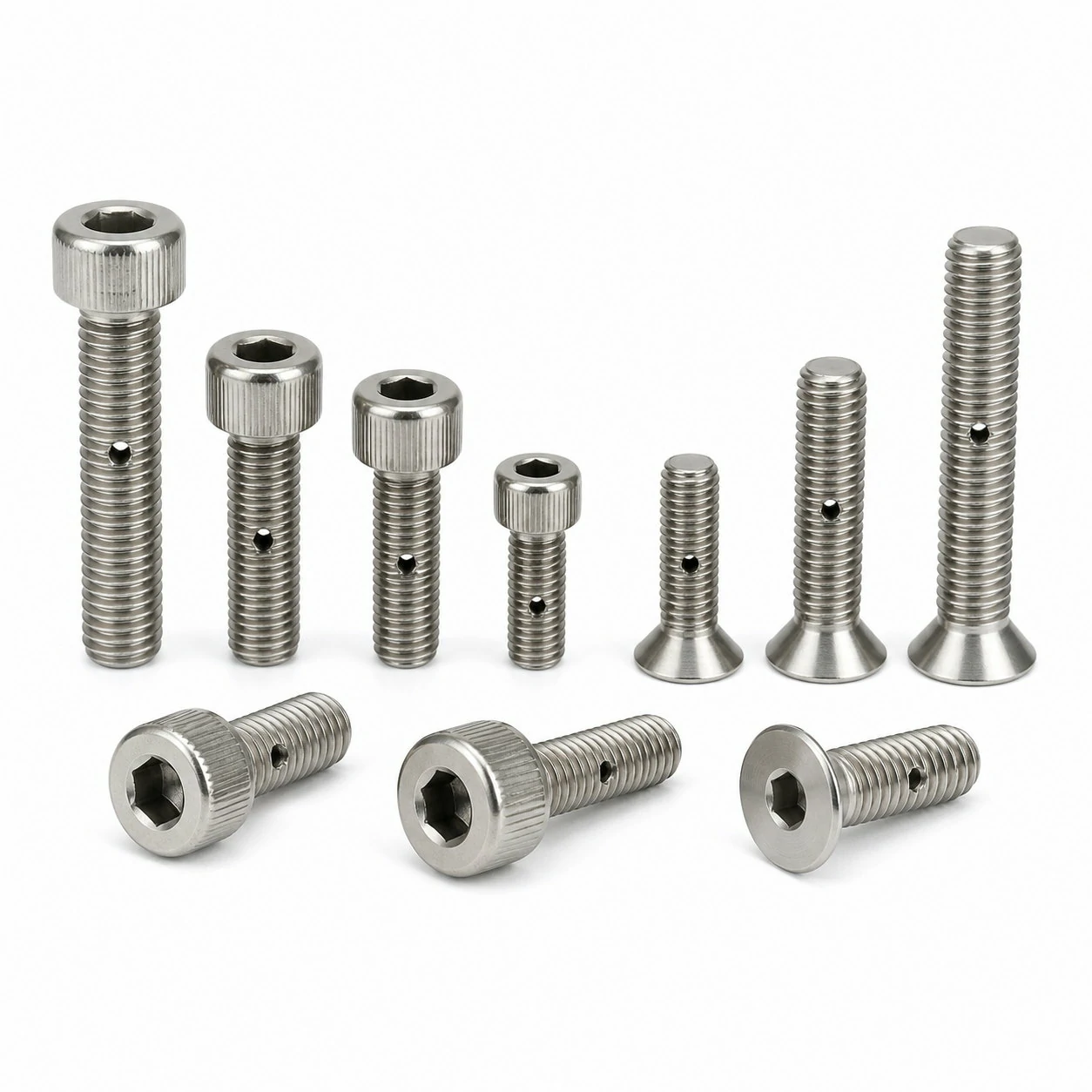
Property Class 8.8 Steel Vented Vacuum Screws are supplied to ISO 898-1 property class 8.8. Corrosion behaviour is requires plating (zinc) for corrosion protection, the material is magnetic, and the usable service range is commonly limited to approx. +300 °C; confirm against the coating and the load. In practice this grade is the workhorse medium-carbon alloy class for structural joints.
- Grade
- ISO 898-1 property class 8.8
- Corrosion resistance
- Requires plating (zinc) for corrosion protection
- Magnetic response
- Magnetic
- Service temperature
- commonly limited to approx. +300 °C; confirm against the coating and the load
Property values are typical for the grade. Certified mechanical test data is available on request for production orders.
Property Class 8.8 Steel Vented Vacuum Screws are supplied to ISO 4762. The grade provides requires plating (zinc) for corrosion protection and is magnetic; the practical service range is commonly limited to approx. +300 °C; confirm against the coating and the load. Property data, grade comparison and the full size table follow.
Why Choose Property Class 8.8 Steel for Vented Vacuum Screws
The workhorse medium-carbon alloy class for structural joints. For vented vacuum screws, this matters when requires plating (zinc) for corrosion protection is the primary requirement.
Mechanical & Physical Properties
| Grade designation | ISO 898-1 property class 8.8 |
|---|
| Magnetic response | Magnetic |
|---|
| Service temperature | commonly limited to approx. +300 °C; confirm against the coating and the load |
|---|
| Corrosion characteristic | Requires plating (zinc) for corrosion protection |
|---|
Corrosion Behavior in Service
Carbon and alloy steel vented vacuum screws require a coating for corrosion protection. Zinc plating (with or without passivation) is the most common; hot-dip galvanizing is used for outdoor structural service; black-oxide is mainly a tarnish-prevention finish for tool-room use.
Galvanic & Galling Considerations
For vented vacuum screws in steel, the dominant compatibility issue is hydrogen embrittlement at high property classes (10.9 and above) when electroplated. Plating must be followed by an appropriate baking treatment, or a non-electroplated finish (mechanical zinc, zinc flake) should be substituted.
Sizes of Vented Vacuum Screws Available in Property Class 8.8 Steel
| Thread size | Pitch (mm) | Head diameter dk (mm) | Head height k (mm) | Hex socket s (mm) | Vent hole diameter (mm) | Common length range (mm) | Reference standard |
|---|
| M3 | 0.5 | 5.5 | 3.0 | 2.5 | 0.8 | 6~30 | ISO 4762 vented |
| M4 | 0.7 | 7.0 | 4.0 | 3 | 1.0 | 8~40 | ISO 4762 vented |
| M5 | 0.8 | 8.5 | 5.0 | 4 | 1.2 | 10~50 | ISO 4762 vented |
| M6 | 1.0 | 10.0 | 6.0 | 5 | 1.5 | 10~60 | ISO 4762 vented |
| M8 | 1.25 | 13.0 | 8.0 | 6 | 2.0 | 12~80 | ISO 4762 vented |
| M10 | 1.5 | 16.0 | 10.0 | 8 | 2.5 | 16~80 | ISO 4762 vented |
Dimensions are independent of the material: every size above is available in Property Class 8.8 Steel.
Custom manufacturing · Made to drawing
Need this screw in a grade that is not listed?
Grade 8 8 Steel is one of the grades the catalog describes. Lengths and thread lengths outside the standard table are the commonest request, followed by a drive the standard does not offer and a head marked with your own part number. Made by cold heading or warm forging.
Minimum order from 2,000 pieces; samples within 7 days of drawing approval.
Custom screw manufacturingSend a drawing
Applications & Industries
Where Vented Vacuum Screws are used, and what decides the specification in each case. Stocked from M3 to M10.
Industries that specify Vented Vacuum Screws
-
Maintenance & MRO
Stocked replacements matched to an existing property class, thread and finish.
-
Food, pharma & cleanroom
Stainless assemblies that are washed down, where the finish matters as much as the strength.
-
Machine building & OEM
The default fastener on production equipment: covers, brackets, motor mounts and sub-assemblies tightened to a specified torque.
-
Automotive & transport
Chassis, driveline and body fixings that see vibration and are assembled to a controlled preload.
-
Steel fabrication
Bolted connections in frames, enclosures, walkways and weldments, on the bench and on site.
-
Energy & infrastructure
Tower, pipework, switchgear and plant fixings specified for long service life and inspectable joints.
Typical applications
- clamping two machined faces to a calculated preload
- bolting brackets, motors and gearboxes to a frame
- assemblies that are dismantled for service and re-torqued
- joints where the property class is stated on the drawing
Service conditions to specify against
- Marine and coastal
- Available in A4 (316) stainless for chloride exposure — coastal structures, pool halls, water treatment and deck hardware, where A2 will eventually pit.
- High load
- Supplied in ISO 898-1 property classes, so the joint can be designed to a stated proof load and tightened to a calculated torque rather than by feel.
- Torque and preload
- The joint is designed around bolt tension, so lubrication, coating and the friction coefficient all change the torque figure — state them together.
Where to use something else
- Do not use a machine thread into unthreaded sheet or timber; use a tapping screw, rivet nut or insert made for that parent material.
Full application guide: where Vented Vacuum Screws are used, how to specify them, and the cases they are wrong for