M33 Flat Washers (ISO 7089 / ISO 7093): the row from the product table, what the nominal bolt size controls in the assembly, and the notes that matter when specifying this size.
M33 Dimensional Row (ISO 7089 / ISO 7093)
For bolt size
Inner diameter d1 min (mm)
Outer diameter d2 max (mm)
Thickness h (mm)
Reference standard
M33
34.0
60.0
5.0
ISO 7089
Mating Parts for M33
A M33 flat washer pairs with a M33 bolt/screw and matching M33 nut.
Custom manufacturing · Made to drawing
Need flat washers in a size this table does not list?
This page covers M33 flat washers. Bore, outside diameter, thickness, temper and finish are the variables here — there is no thread to specify, so the fit and the bearing area are what the drawing has to pin down. Made by stamping or punching.
Minimum order from 2,000 pieces; samples within 7 days of drawing approval.
Customize the parameters below — every spec field is editable, and the drawing redraws to match the values you choose. Changing the size will snap the other fields to that size's standard values; you can then override any individual value.
Dimensioned line drawing of M33 Flat Washers to ISO 7089 / ISO 7093. Side view and top view, drawn to the dimensions in the table below and redrawn for any size selected.
Inner diameter d1 min (mm)
34.0
Outer diameter d2 max (mm)
60.0
Thickness h (mm)
5.0
Sends the selected values to the quote form below.
Request a Quote
The form below follows the current technical drawing configuration. Change the drawing values above and the request details update automatically.
Dimensions & Specifications (ISO 7089 / ISO 7093)
For bolt size
Inner diameter d1 min (mm)
Outer diameter d2 max (mm)
Thickness h (mm)
Reference standard
M1.6
1.7
4.0
0.3
ISO 7089
M2
2.2
5.0
0.3
ISO 7089
M2.5
2.7
6.0
0.5
ISO 7089
M3
3.2
7.0
0.5
ISO 7089
M3.5
3.7
8.0
0.5
ISO 7089
M4
4.3
9.0
0.8
ISO 7089
M5
5.3
10.0
1.0
ISO 7089
M6
6.4
12.0
1.6
ISO 7089
M7
7.4
14.0
1.6
ISO 7089
M8
8.4
16.0
1.6
ISO 7089
M10
10.5
20.0
2.0
ISO 7089
M12
13.0
24.0
2.5
ISO 7089
M14
15.0
28.0
2.5
ISO 7089
M16
17.0
30.0
3.0
ISO 7089
M18
19.0
34.0
3.0
ISO 7089
M20
21.0
37.0
3.0
ISO 7089
M22
23.0
39.0
3.0
ISO 7089
M24
25.0
44.0
4.0
ISO 7089
M27
28.0
50.0
4.0
ISO 7089
M30
31.0
56.0
4.0
ISO 7089
M33
34.0
60.0
5.0
ISO 7089
M36
37.0
66.0
5.0
ISO 7089
M39
40.0
72.0
6.0
ISO 7089
M42
43.0
78.0
7.0
ISO 7089
M45
46.0
85.0
7.0
ISO 7089
M48
50.0
92.0
8.0
ISO 7089
M52
54.0
98.0
8.0
ISO 7089
M56
58.0
105.0
9.0
ISO 7089
M60
62.0
110.0
9.0
ISO 7089
M64
66.0
115.0
9.0
ISO 7089
M5
5.3
15.0
1.0
ISO 7093 large series
M6
6.4
18.0
1.6
ISO 7093 large series
M8
8.4
24.0
2.0
ISO 7093 large series
M10
10.5
30.0
2.5
ISO 7093 large series
M12
13.0
37.0
3.0
ISO 7093 large series
M16
17.0
50.0
3.0
ISO 7093 large series
M20
21.0
60.0
4.0
ISO 7093 large series
M24
25.0
72.0
5.0
ISO 7093 large series
Materials & Grades
Select a material class to see the grades we supply it in. Each designation is listed with its ISO/EN, AISI/SAE, JIS and GB equivalents.
AISI 420SUS420J1 · SUS420J2 · EN 1.4021 · EN 1.4028 · 20Cr13 · 30Cr13
AISI 431SUS431 · EN 1.4057 · X17CrNi16-2
C1
C3
C4
AISI 440A
AISI 440B
AISI 440CSUS440C · EN 1.4125
Ferritic Stainless Steel
AISI 430SUS430 · EN 1.4016 · X6Cr17 · 10Cr17
F1
AISI 434
AISI 444
Precipitation-Hardening Stainless Steel
17-4 PHAISI 630 · UNS S17400 · SUS630 · EN 1.4542 · X5CrNiCuNb16-4
15-5 PHUNS S15500
17-7 PHUNS S17700
Duplex and Super Duplex Stainless Steel
Duplex 2205UNS S31803 · UNS S32205 · EN 1.4462
Super Duplex 2507UNS S32750 · EN 1.4410
D2
D4
D6
D8
Lean Duplex 2101UNS S32101
Super Duplex S32760UNS S32760 · EN 1.4501
Carbon Steel
Low-Carbon Steel
SAE 1006
SAE 1008
SAE 1010
SAE 1018
SAE 1020
Q195
Q235
SAE 1012
SAE 1015
Q215
ML08
ML08Al
ML10
ML15
ML20
SWRCH6A
SWRCH8A
SWRCH10A
SWRCH12A
SWRCH15A
SWRCH18A
Medium-Carbon Steel
SAE 1035
SAE 1045
S45C
C45
SAE 1030
SAE 1040
SAE 1050
30
35
40
45
50
S35C
S40C
S50C
C35
C40
High-Carbon Steel
SAE 1060
SAE 1070
65Mn
SAE 1065
SAE 1075
SAE 1080
SAE 1085
SAE 1090
SAE 1095
60
65
70
75
80
85
Cold-Heading Steel
SWRCH22A
10B21
SWRCH22K
SWRCH25K
SWRCH30K
SWRCH35K
SWRCH40K
ML20Mn
ML25
ML30
ML35
ML40
15B25
Alloy Steel
Chromium Steel
40Cr
45Cr
AISI 5140
SAE 5140
AISI 5120
SAE 5120
SCr420
SCr440
Chromium-Molybdenum Steel
35CrMo
42CrMo
AISI 4140
SCM435
SCM440
42CrMo4
30CrMo
AISI 4130
SAE 4130
SAE 4140
AISI 4142
AISI 4145
SCM415
SCM420
SCM445
EN 1.7220
EN 1.7225
25CrMo4
34CrMo4
Nickel-Chromium-Molybdenum Steel
AISI 4340
SAE 4340
40CrNiMo
SNCM439
EN 1.6511
36CrNiMo4
Boron Alloy Steel
10B22
10B21
15B21
15B25
20MnTiB
20Mn2B
35VB
40MnB
Bearing Steel
Bearing Steel
GCr15
AISI 52100SAE 52100 · UNS G52986
SUJ2
100Cr6EN 1.3505
GCr15SiMn
Spring Steel
Carbon Spring Steel
SAE 1065
SAE 1070
SAE 1075
SAE 1080
SAE 1095
65
70
75
80
65Mn
Silicon-Manganese Spring Steel
60Si2Mn
60Si2MnA
SUP6
SUP7
Chromium-Vanadium Spring Steel
50CrVA
SAE 6150
AISI 6150
SUP10
Stainless Spring Steel
AISI 301
SUS301
EN 1.4310
AISI 302
AISI 304
AISI 316
17-7 PH
Aluminum and Aluminum Alloys
Commercially Pure Aluminum
1050
1060
1070
1100
2xxx Series Aluminum
2024
2011
2014
2017
5xxx Series Aluminum
5052
5083
5754
6xxx Series Aluminum
6061
6061-T6
6063
6082
6082-T6
7xxx Series Aluminum
7075
7075-T6
7005
7050
7075-T73
Brass
Free-Cutting Brass
C36000
H62
HPb59-1
C3601
C3602
C3604
CuZn36Pb3
CuZn39Pb3
EN CW614N
EN CW617N
H65
Lead-Free Brass
C69300
C27450
CW510L
CW511L
Naval Brass
C46400
CuZn39Sn1
Bronze
Silicon Bronze
C65500
C65100
C65600
Phosphor Bronze
C51000
C52100
CuSn6
CuSn8
Aluminum Bronze
C95400
C95500
C63000
CuAl10Ni5Fe4
Copper
Copper
C11000
T2
C10100
C10200
C12200
T1
TU1
TU2
Titanium and Titanium Alloys
Commercially Pure Titanium
Grade 2
Grade 1
Grade 3
Grade 4
TA1
TA2
TA3
Alpha-Beta Titanium Alloys
Grade 5
Ti-6Al-4V
TC4
UNS R56400
Low-Interstitial Grade
Grade 23
Ti-6Al-4V ELI
UNS R56407
Other Titanium Fastener Alloys
Ti-6Al-6V-2Sn
Ti-6Al-2Sn-4Zr-2Mo
Beta-C titanium
Ti-10V-2Fe-3Al
Nickel and Nickel Alloys
Commercially Pure Nickel
Nickel 200
UNS N02200
Nickel 201
UNS N02201
Inconel Alloys
Inconel 625UNS N06625
Inconel 718UNS N07718
Inconel 600UNS N06600
Inconel 601UNS N06601
Inconel 686UNS N06686
Inconel X-750UNS N07750
Monel Alloys
Monel 400UNS N04400
Monel K-500UNS N05500
Hastelloy Alloys
Hastelloy C-276UNS N10276
Hastelloy C-22UNS N06022
Hastelloy B-2UNS N10665
Hastelloy B-3UNS N10675
Hastelloy XUNS N06002
Other Nickel Alloys
Alloy 20UNS N08020
Alloy 625
Alloy 718
Alloy 825UNS N08825
Alloy 925UNS N09925
Iron-Nickel and High-Temperature Alloys
A286
A-286
UNS S66286
EN 1.4980
Invar
Invar 36
Alloy 36
UNS K93600
FeNi36
Alloy 42
Alloy 42
UNS K94100
FeNi42
Tool Steel and Specialty Hardened Steel
Tool Steel and Specialty Hardened Steel
AISI D2
AISI H13
SKD11
Cr12MoV
AISI O1
AISI A2
AISI S7
SKD61
9CrSi
Structural and Construction Steel
Structural and Construction Steel
ASTM A36
Q235B
Q355B
S355JR
Q235C
Q355C
S235JR
S275JR
S355J2
Applications & Industries for M33 Flat Washers
Flat Washers are bought for a small number of well-defined jobs. These are the ones we ship them for. Stocked from M1.6 to M24 (nominal bolt size).
Industries that specify Flat Washers
Rotating & vibrating plantSpring, tooth and wedge types that maintain or lock bolt tension.
Steel fabricationSpreading load under a head or nut and protecting the surface finish.
Machine building & OEMSetting bearing area on soft alloy, plastic and oversized holes.
Timber & constructionLarge-diameter washers that stop pull-through in softer material.
Typical applications
spreading clamp load over a soft or oversized bearing face
protecting a painted or plated surface under a turned nut
maintaining bolt tension in a joint that settles
Service conditions to specify against
Marine and coastal
Available in A4 (316) stainless for chloride exposure — coastal structures, pool halls, water treatment and deck hardware, where A2 will eventually pit.
Hardness matters
Under a high-strength bolt a soft washer embeds into the joint and preload is lost — specify a hardened washer for structural bolting.
Third-party video, selected automatically for this topic. It is not produced by Engineering Hardware and is not a specification source — use the tables on this page for dimensional data.
Inside the plant
Manufactured in our own plant
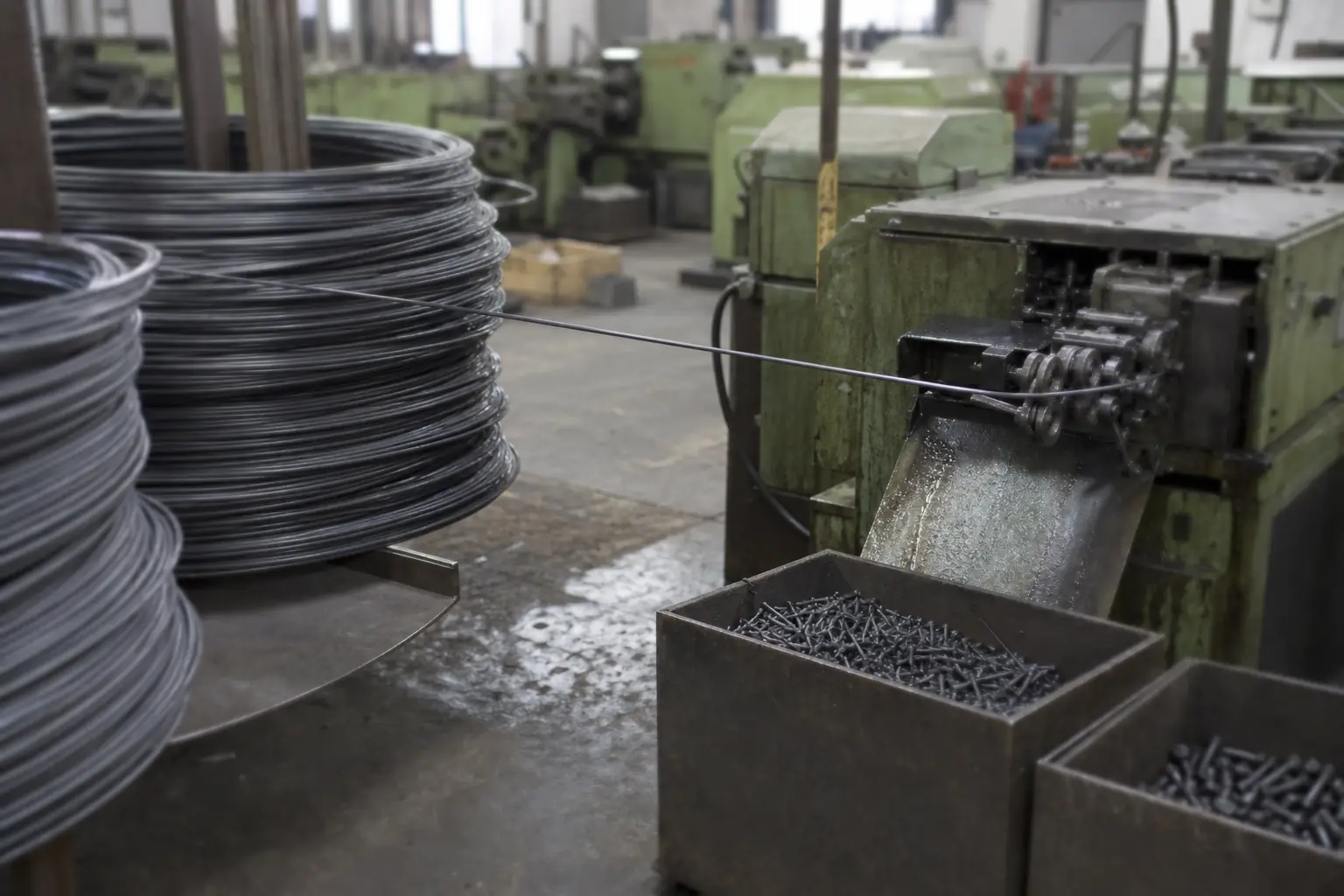
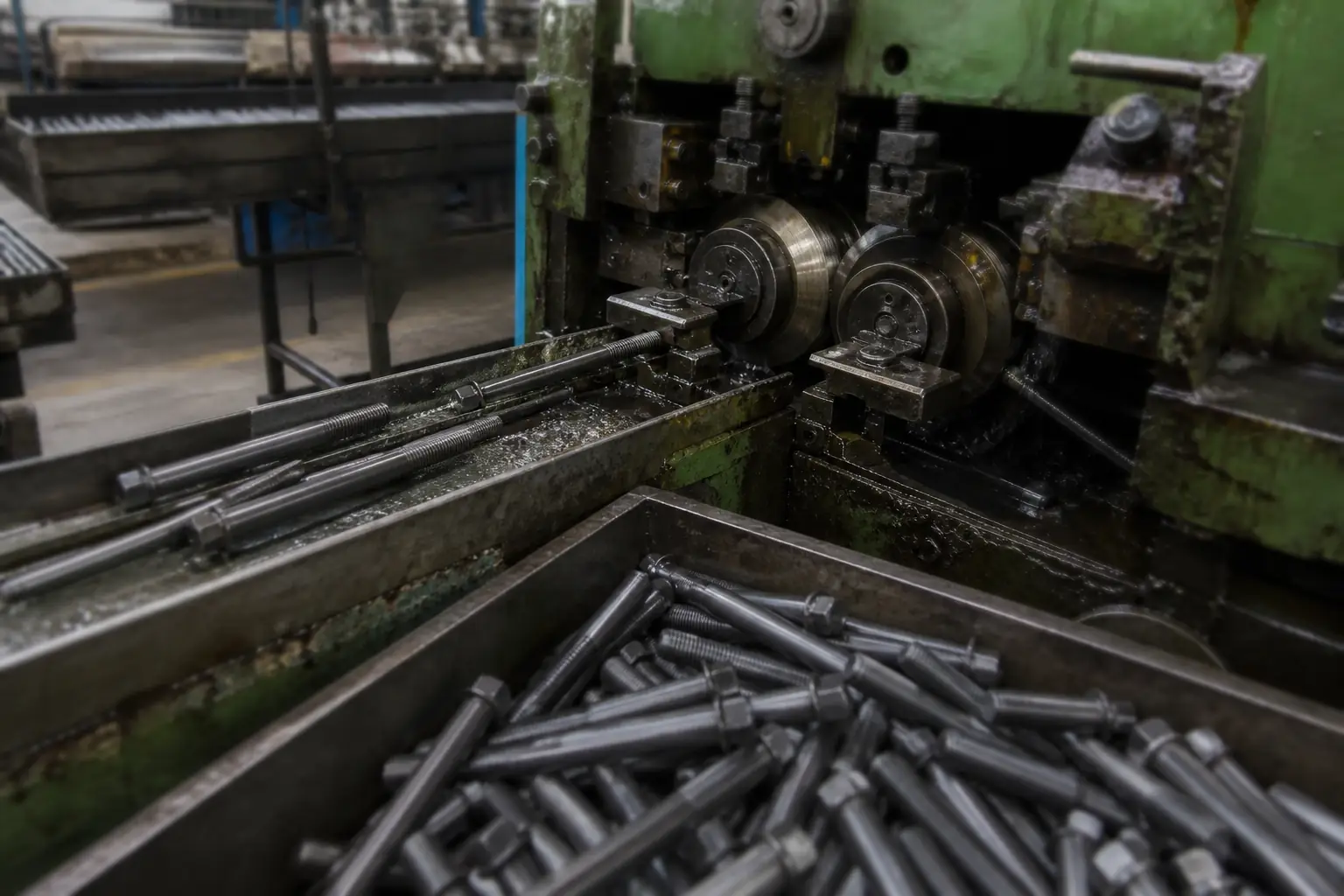
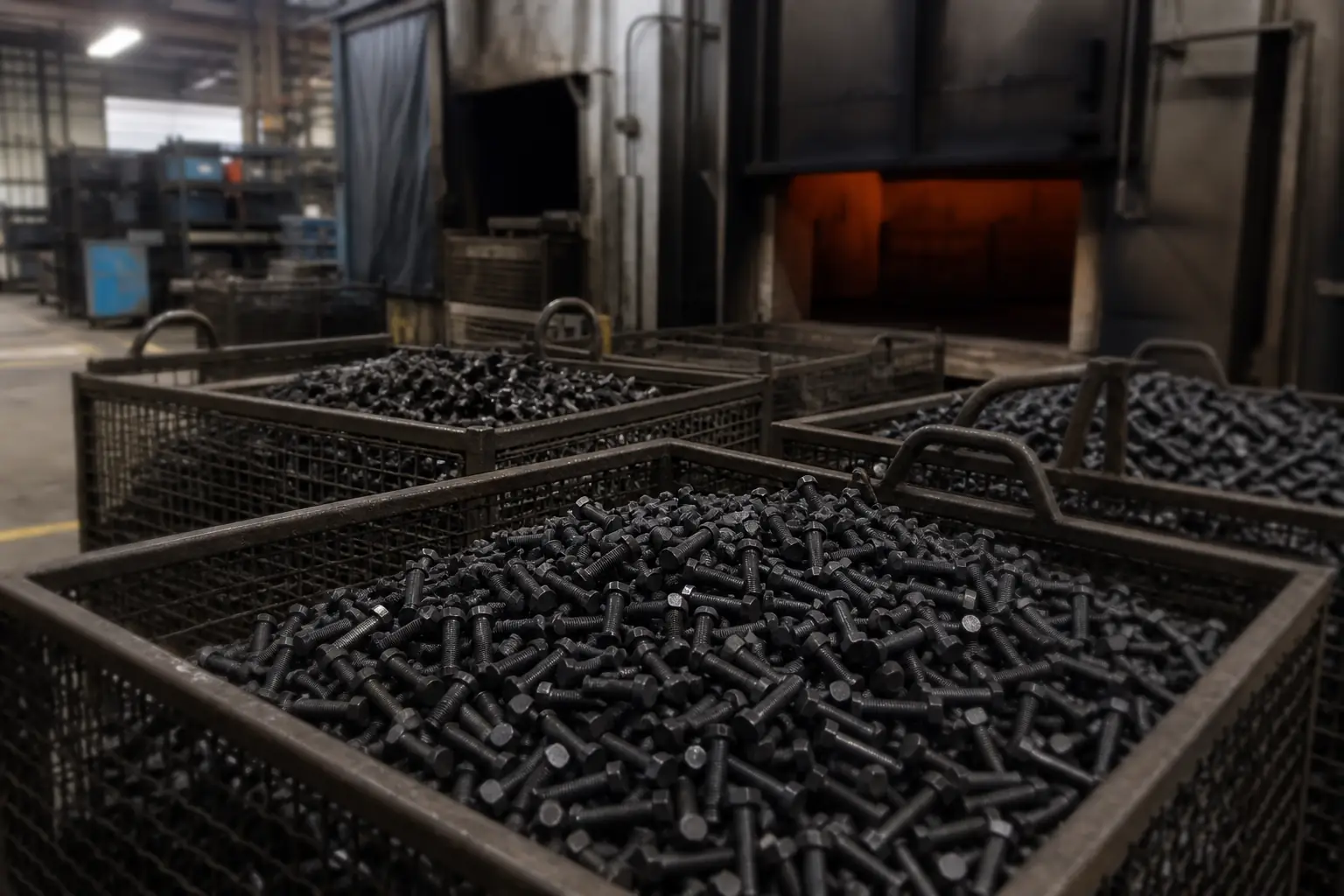
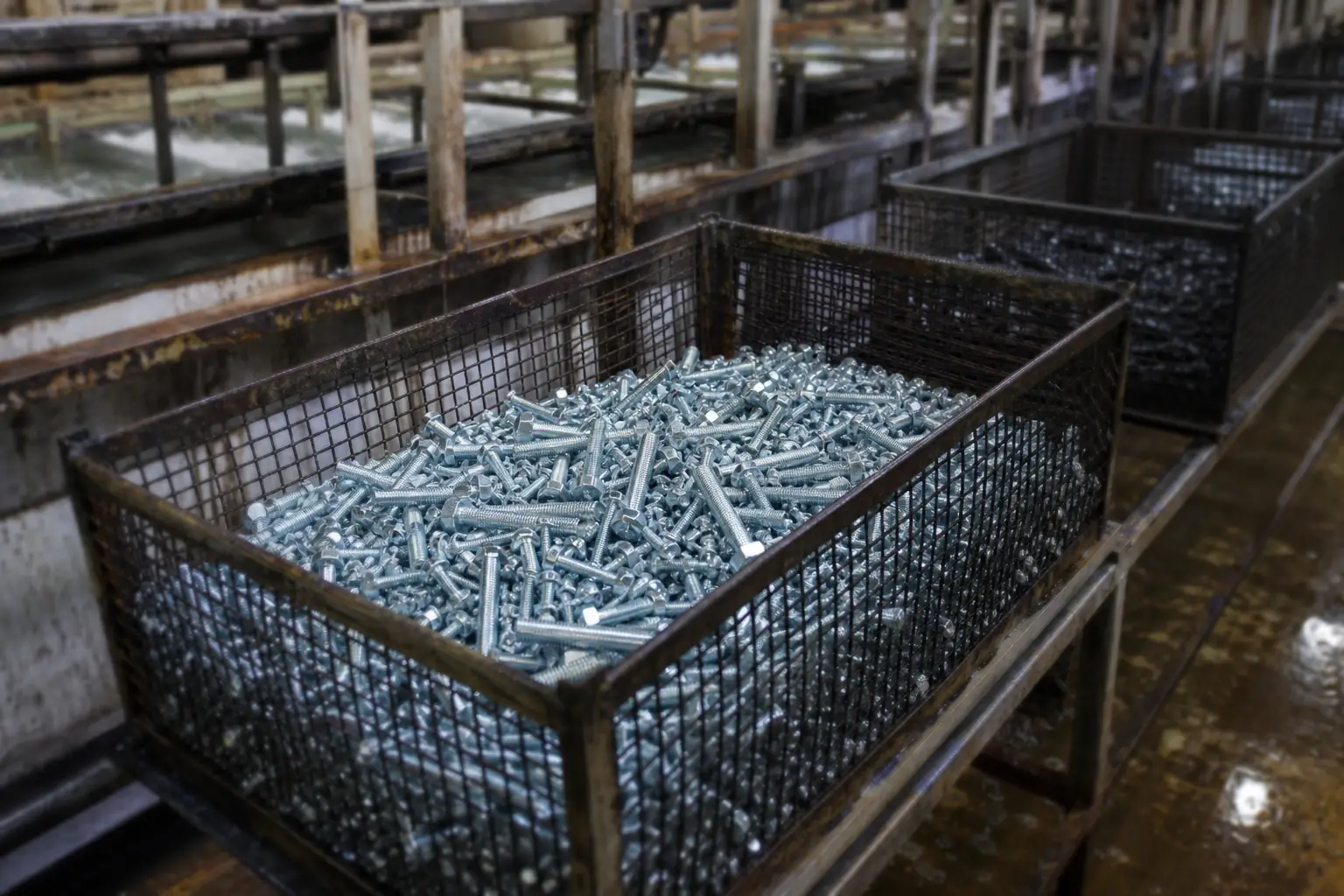
This part is cold-formed, threaded, heat-treated and finished in-house. The stages below are where its class and finish are actually decided.
01
Cold heading
Wire rod is drawn to size and cold-formed into blanks. Forming rather than cutting keeps the grain flow continuous around the head, which is where a bolt is most likely to fail.
Head dimensions and under-head radius checked at set-up and per shift.
02
Thread rolling
Threads are rolled between hardened dies rather than cut. Rolled threads are stronger in fatigue than cut threads and hold pitch and flank angle far more consistently across a batch.
Go / no-go ring gauges to ISO 965 tolerance class 6g.
03
Heat treatment
Quench-and-temper brings carbon and alloy steel to the property class ordered — 8.8, 10.9 or 12.9 — with the furnace charge tracked so a finished lot can be traced back to it.
Core hardness and tensile tested per lot to ISO 898-1.
04
Surface treatment
Zinc, zinc-nickel, hot-dip galvanizing, black oxide, phosphate and Dacromet, selected against the service environment rather than against the price list.
Coating thickness and neutral salt spray hours to ISO 9227.
Frequently Asked Questions
Should M33 Flat Washers be tightened by torque or by angle?
For critical structural joints at M33, angle-controlled or stretch-controlled tightening is more repeatable than pure torque — the friction scatter at large diameters can dominate the torque signal.
What grip range is typical for M33 structural bolts?
Grip ranges are highly application-dependent at M33. As a guide, choose a length that gives at least 1× the thread diameter engagement in the nut plus 2–3 thread pitches projecting.
Which washer dimensions matter most for M33?
For a flat washer, the outside diameter (the bearing surface) and the thickness control how the load is spread under the head and how much elastic preload is preserved. The inside diameter must clear the bolt body but not be so large that the head bears mostly on the washer's outer rim.
What is the coarse-thread pitch of M33 for Flat Washers?
For M33 the standard coarse pitch is 3.5 mm — this is the value used for Flat Washers.
How do I request a quotation?
Use the technical drawing on this page to pick the exact configuration, then submit it with the quote form. We respond within one business day.
Need a fastener quote or a spec sheet?Message our engineers on WhatsApp — send a drawing or DIN number and get pricing back fast.Start WhatsApp Chat →
This website uses only necessary and functional cookies to operate, secure, and improve basic website performance.
We do not use advertising cookies, Google Analytics, or cross-site tracking technologies.
Privacy Policy