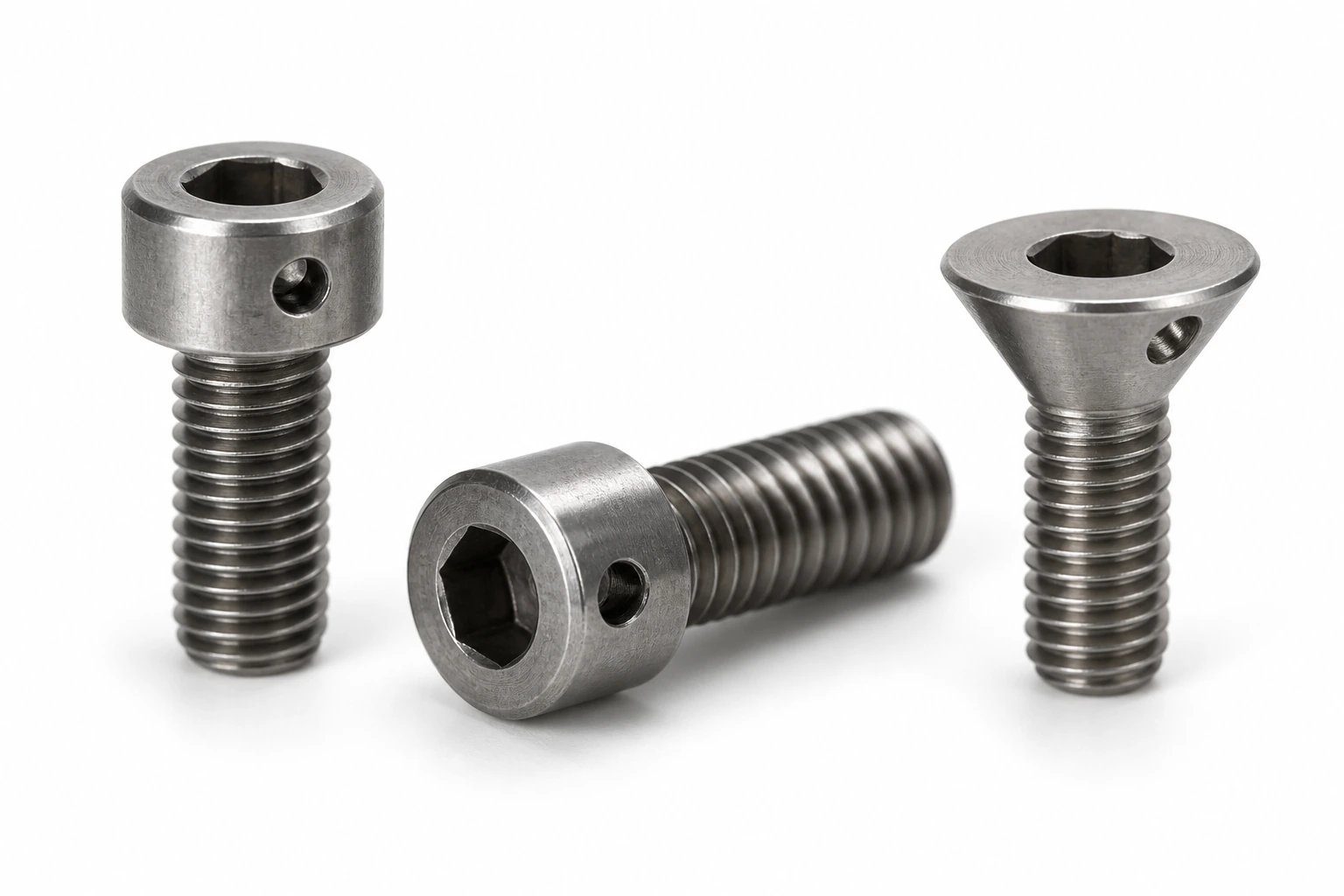
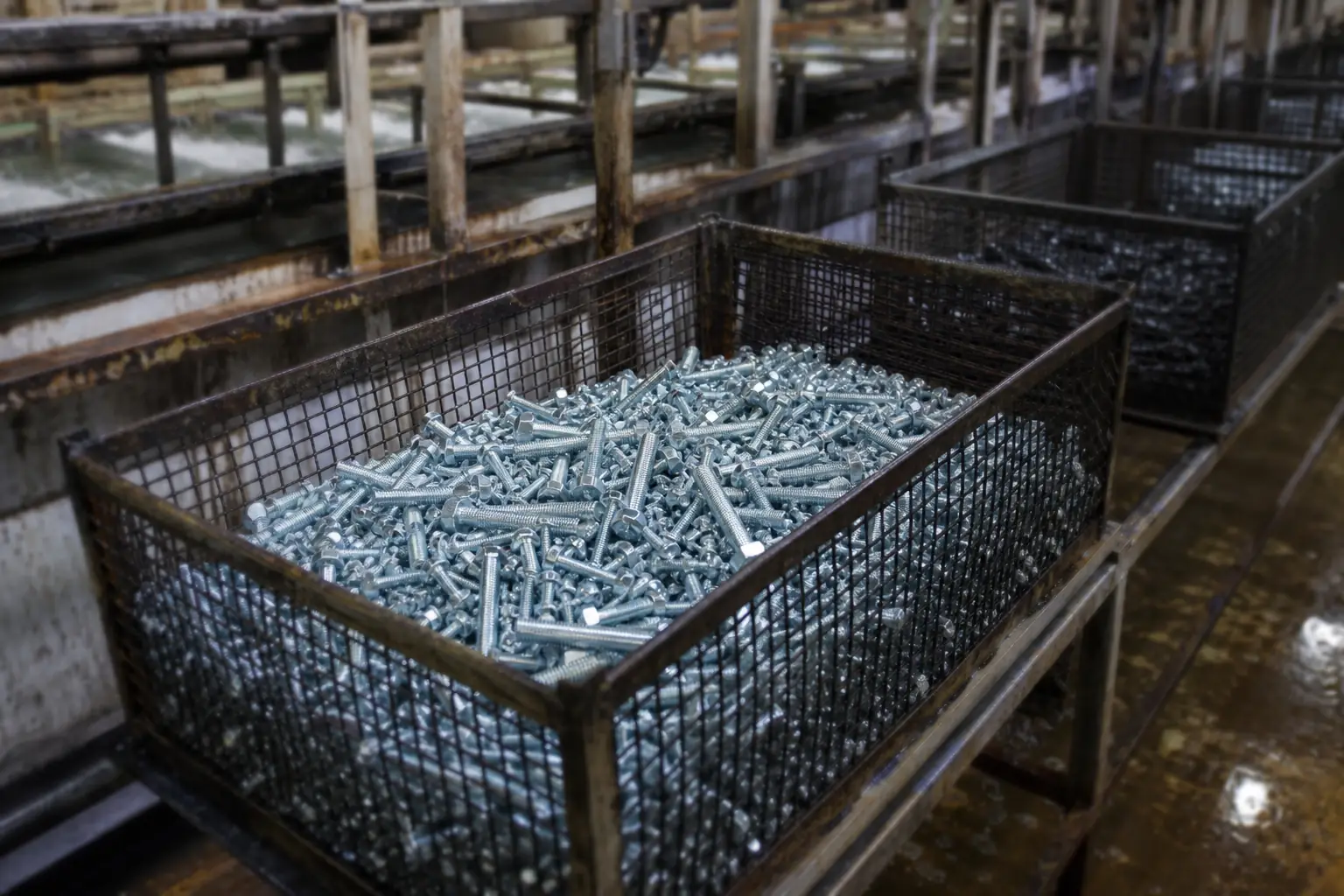
ISO 10642 is the governing dimensional standard for drilled-head capstan sealing screws. This page sets out the scope of the standard, reproduces the full size table it specifies, and lists the DIN/ISO/ASME cross-references commonly cited in datasheets and drawings.
ISO 10642 — Scope
ISO 10642 is "Hexagon socket countersunk head screws".
Material, property class, surface finish and packaging are governed by separate documents — ISO 898-1 and ISO 898-2 for mechanical property classes, ISO 4042 for electroplated finishes.
Tolerance & Product Grades
ISO 10642 does not divide drilled-head capstan sealing screws into product grades. Tolerances are given as limits on the individual dimensions in the table.
Where a general-tolerance class is cited on the drawing instead, it applies to the dimensions not otherwise toleranced.
Dimensions Specified by ISO 10642
| Head form | Governing standards | Sealing feature | Property class | Finish |
|---|
| hexagon socket head cap | GB/T 70.1-2008 / DIN 912 / ISO 4762 | cross-drilled head for sealing wire | 8.8 | black oxide |
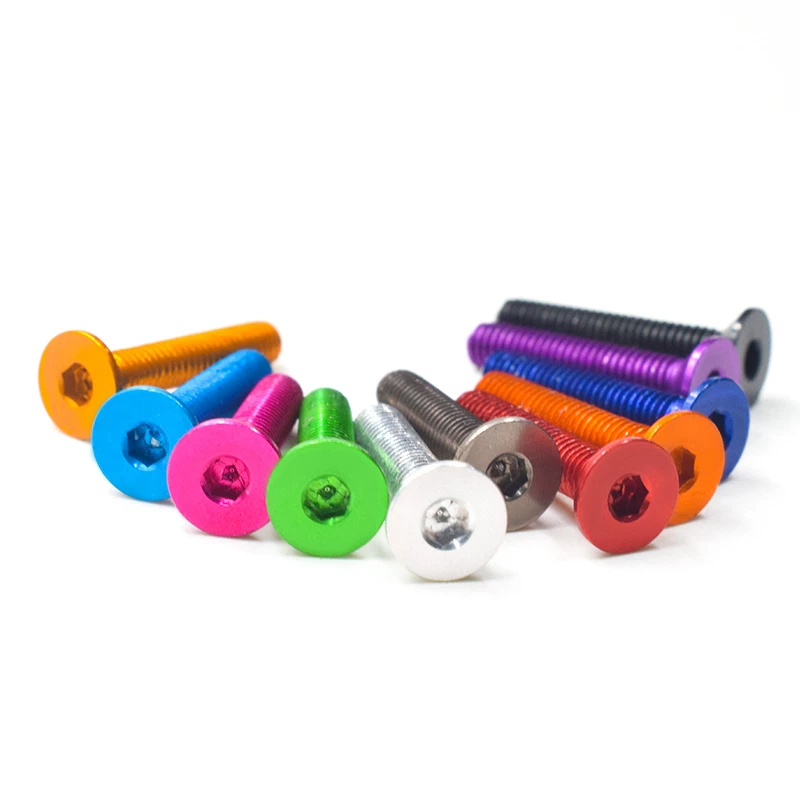
| countersunk hexagon socket | GB/T 70.3-2008 / DIN 7991 / ISO 10642 | cross-drilled head for sealing wire | 8.8 | black oxide |
Companion Standards
ISO 10642 controls only the geometry of drilled-head capstan sealing screws. The mechanical strength is set by ISO 898-1 (bolts, screws and studs) or ISO 898-2 (nuts); the surface finish is governed by separate finish standards such as ISO 4042 for electroplating. For corrosion testing, the relevant document is ISO 9227 (neutral salt spray).
When to Specify ISO 10642
Choose ISO 10642 for international engineering work and OEM supply where ISO standards are the contractual reference. It is the default modern specification for drilled-head capstan sealing screws.
Custom manufacturing · Made to drawing
Need a screw to this standard in a non-standard size?
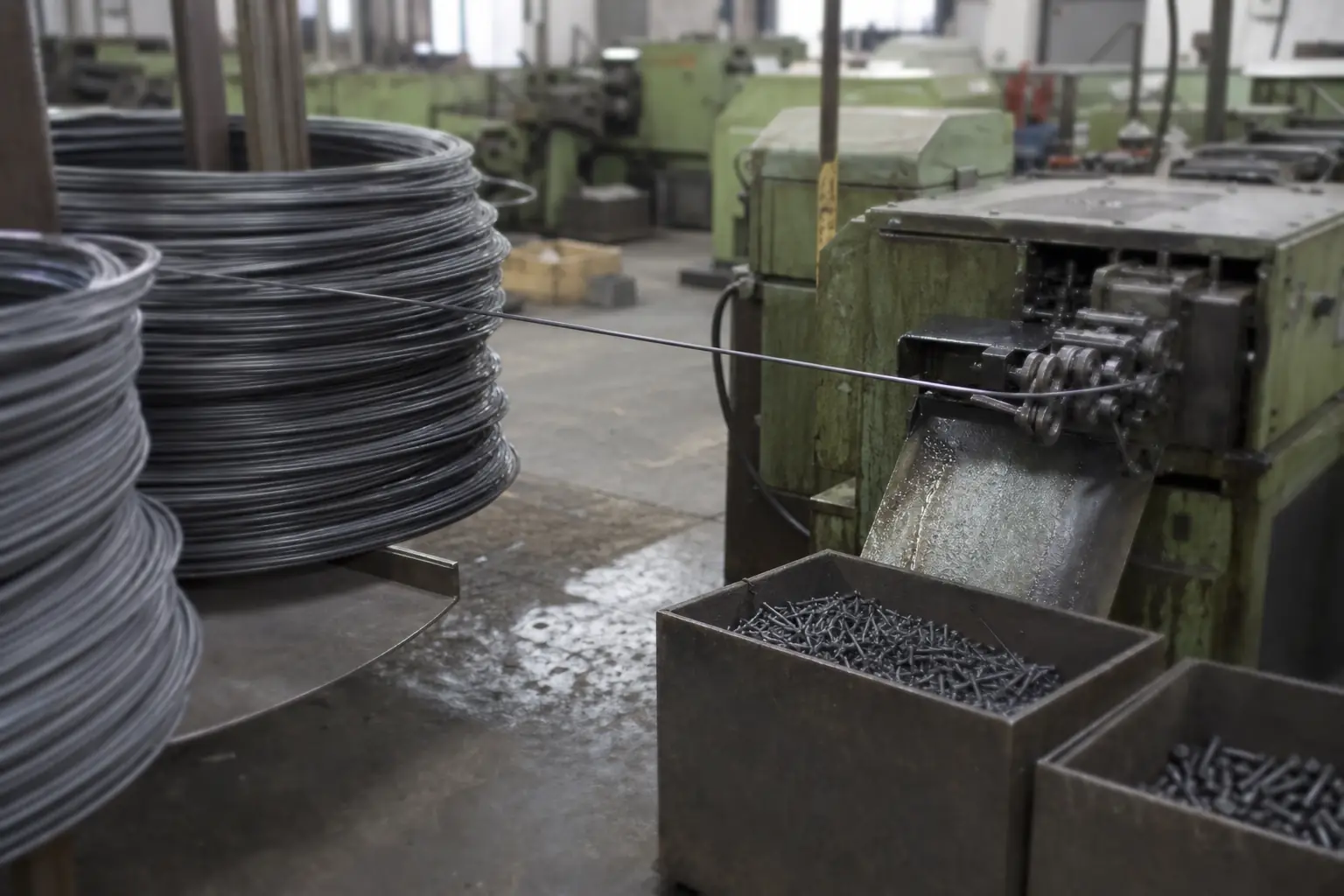
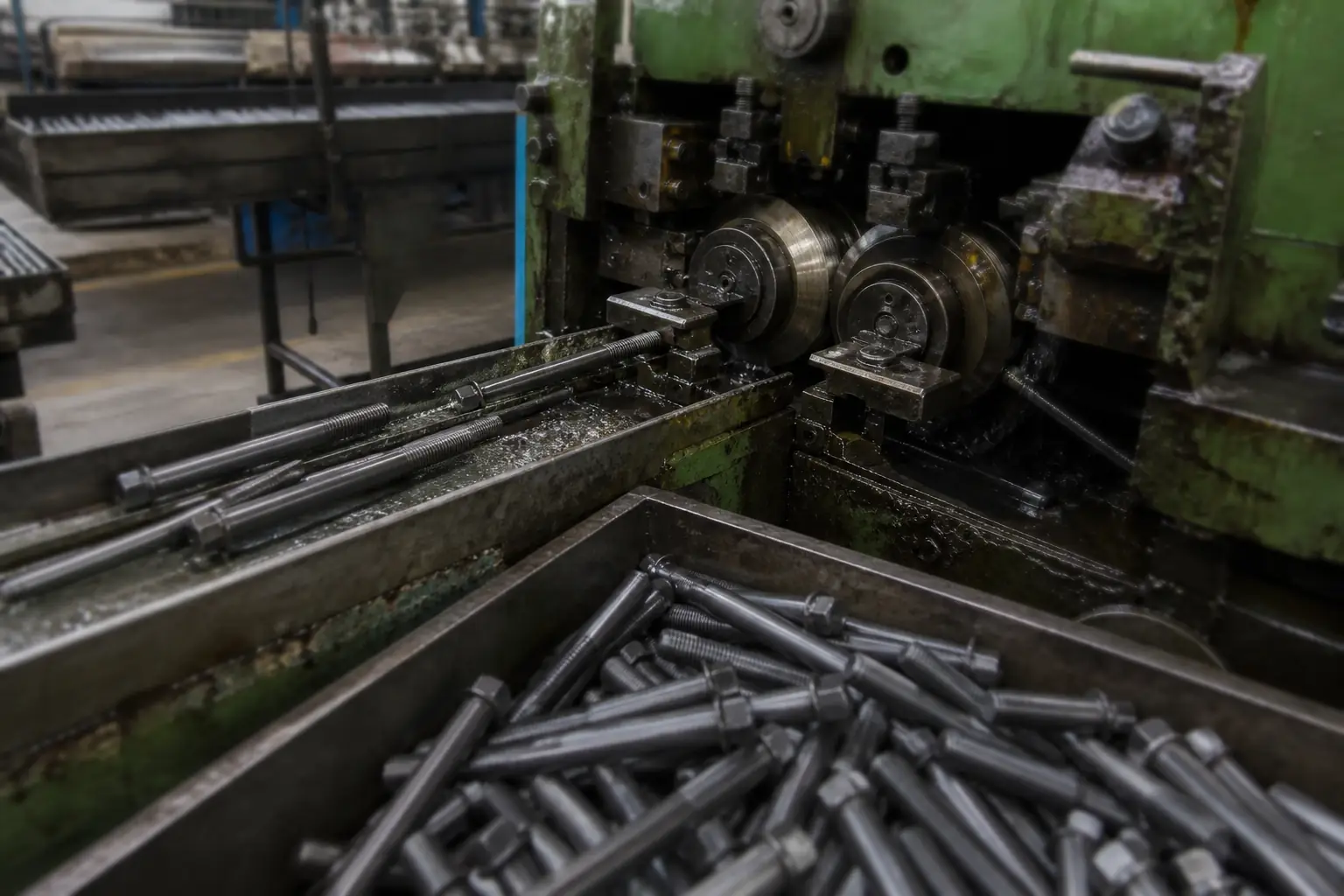
Parts built to ISO 10642 are already in the catalog, so a special is usually a variation on existing tooling rather than a new design — which is what keeps the cost down. Made by cold heading or warm forging.
Minimum order from 2,000 pieces; samples within 7 days of drawing approval.
Custom screw manufacturingSend a drawing
Applications & Industries
Drilled-Head Capstan Sealing Screws are bought for a small number of well-defined jobs. These are the ones we ship them for. Stocked from hexagon socket head cap to countersunk hexagon socket (nominal diameter).
Industries that specify Drilled-Head Capstan Sealing Screws
-
Regulated installations
Evidence of an unbroken seal on inspection.
-
Utility metering
A cross-drilled head takes a sealing wire that shows tampering.
-
Instrument enclosures
Closure control on calibrated equipment.
-
Test and measurement
Sealed access for certified instruments.
-
Food, pharma & cleanroom
Stainless assemblies that are washed down, where the finish matters as much as the strength.
-
Machine building & OEM
The default fastener on production equipment: covers, brackets, motor mounts and sub-assemblies tightened to a specified torque.
Typical applications
- recording the seal number against the installation
- threading a sealing wire through the drilled head and crimping it
- choosing the cap or countersunk form for the enclosure detail
- specifying class 8.8 black oxide as listed
- joints where the property class is stated on the drawing
- clamping two machined faces to a calculated preload
Service conditions to specify against
- Marine and coastal
- Available in A4 (316) stainless for chloride exposure — coastal structures, pool halls, water treatment and deck hardware, where A2 will eventually pit.
- High load
- Supplied in ISO 898-1 property classes, so the joint can be designed to a stated proof load and tightened to a calculated torque rather than by feel.
- Sealed joints
- Used where the fixing has to keep water or air out as well as hold — the elastomer, not the fastener, decides service life.
- Torque and preload
- The joint is designed around bolt tension, so lubrication, coating and the friction coefficient all change the torque figure — state them together.
Where to use something else
- Do not fit a sealing screw without actually closing the wire; an undrawn seal proves nothing.
- Do not use a machine thread into unthreaded sheet or timber; use a tapping screw, rivet nut or insert made for that parent material.
Full application guide: where Drilled-Head Capstan Sealing Screws are used, how to specify them, and the cases they are wrong for