
Forgotten zipper patent from 1920s guides new tri-directional fastener
MIT researchers have turned to a century-old patent to create the Y-zipper, a three-sided fastener that moves beyond the linear design of traditional zippers.
The evolution of everyday fasteners rarely sparks excitement, yet a new design from the Massachusetts Institute of Technology (MIT) is challenging conventional engineering. By looking back at a blueprint filed nearly a hundred years ago, researchers have produced a prototype that could reshape how garments, bags, and industrial enclosures are closed. The invention, dubbed the Y-zipper, introduces a three-sided interlocking mechanism that departs from the familiar linear zipper path.
How the three-sided zipper operates
Standard zippers join two edges along a single axis. The Y-zipper adds a central spine that allows three strips of teeth to mesh simultaneously. This configuration creates a junction point where a single slider can engage all three tracks, forming a symmetrical, Y-shaped closure.
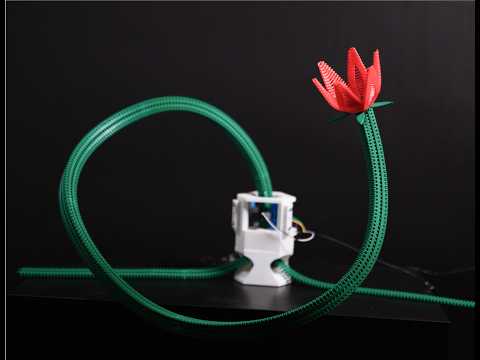
- The fastener incorporates a redesigned slider head that navigates a tripartite tooth profile.
- Each arm of the Y can be independently opened or closed, offering selective access.
- The tooth geometry, inspired by an early 20th-century patent, uses an interlocking wedge that stabilises the three-way junction.
- Early prototypes made from reinforced polymer deliver tensile strengths comparable to mid-weight metal zippers.
Industrial context and design challenges
Zippers are a mature market, dominated by a handful of global manufacturers. Innovation often focuses on material science—waterproof coatings, anti-corrosion metals—rather than fundamental geometry. The Y-zipper required solving a complex spatial puzzle: preventing the teeth from binding as the slider moves through the convergence point. MIT engineers used computational modelling to iterate the tooth shape, settling on a profile that distributes stress evenly across all three branches. If scaled for production, the three-sided zipper could meet performance standards set by industry bodies such as ASTM International for textile fasteners.
Potential uses extend to modular tent systems, medical braces with multiple access ports, and aerospace cable harness closures where branched routing is common. The design also aligns with the trend toward reconfigurable soft goods, allowing users to create new shapes by connecting fabric panels in triangular formations.
Still, commercialisation faces hurdles. Retooling zipper extrusion lines for a three-track profile would be costly, and consumer acceptance depends on ease of use. The slider mechanism must be refined to prevent accidental disengagement under lateral tension. Researchers are exploring magnetic-assisted alignment to guide the slider smoothly through the junction.
Whether apparel brands will embrace a fundamentally unfamiliar fastener remains an open question—one that will test whether industrial nostalgia can truly drive everyday utility.
| Aspect | Details |
|---|---|
| Origin | Inspired by a vintage patent for a three-sided closure |
| Institution | MIT engineers and designers |
| Mechanism | Single slider engages three interlocking tooth tracks |
| Materials | Reinforced polymer prototypes; potential for metal variants |
| Target strength | Comparable to mid-weight metal zippers |
| Applications | Tents, medical braces, aerospace cable management, reconfigurable fabrics |
Why This Matters
The Y-zipper upends a century of linear-fastener thinking. By solving the geometric challenge of three-way interlocking, MIT's design could spur a new class of reconfigurable textiles and enclosures. It demonstrates that overlooked historical patents remain a resource for driving practical innovation in mature industries.
Sources
- MIT (mit.edu)
- ASTM International (astm.org)
Source: Lemmy !hackernews
FAQ
How current is this fastener information?
This article was published on July 25, 2026. News changes quickly, so use it as a starting point and check the named source for later corrections, revised figures or follow-up reporting.
Is this fastener report confirmed?
It reflects what the cited reporting stated at the time, which can be preliminary. For anything consequential, comparing two or more independent reports is the most reliable way to confirm the details.
Who and where is involved in this fastener story?
The article identifies the main organisations, people and locations tied to the development. Those named entities are the anchors for following how the story evolves across later coverage.
Is Lemmy !hackernews the only source for this fastener story?
Lemmy !hackernews is the outlet attached to this item, but it should not be the only reference for an important development. Comparing it with other independent reports gives a fuller and more reliable picture.
What is this fastener story about?
It summarises a recent development in fastener, drawing on the original reporting. The key facts — who is involved, what changed and any figures or dates attached — are highlighted so the story is quick to grasp.
Why does this fastener development matter?
The significance lies in what it signals: a notable figure, a decision, or a shift that affects the people, places or organisations named. Those are the points worth following as the story continues.