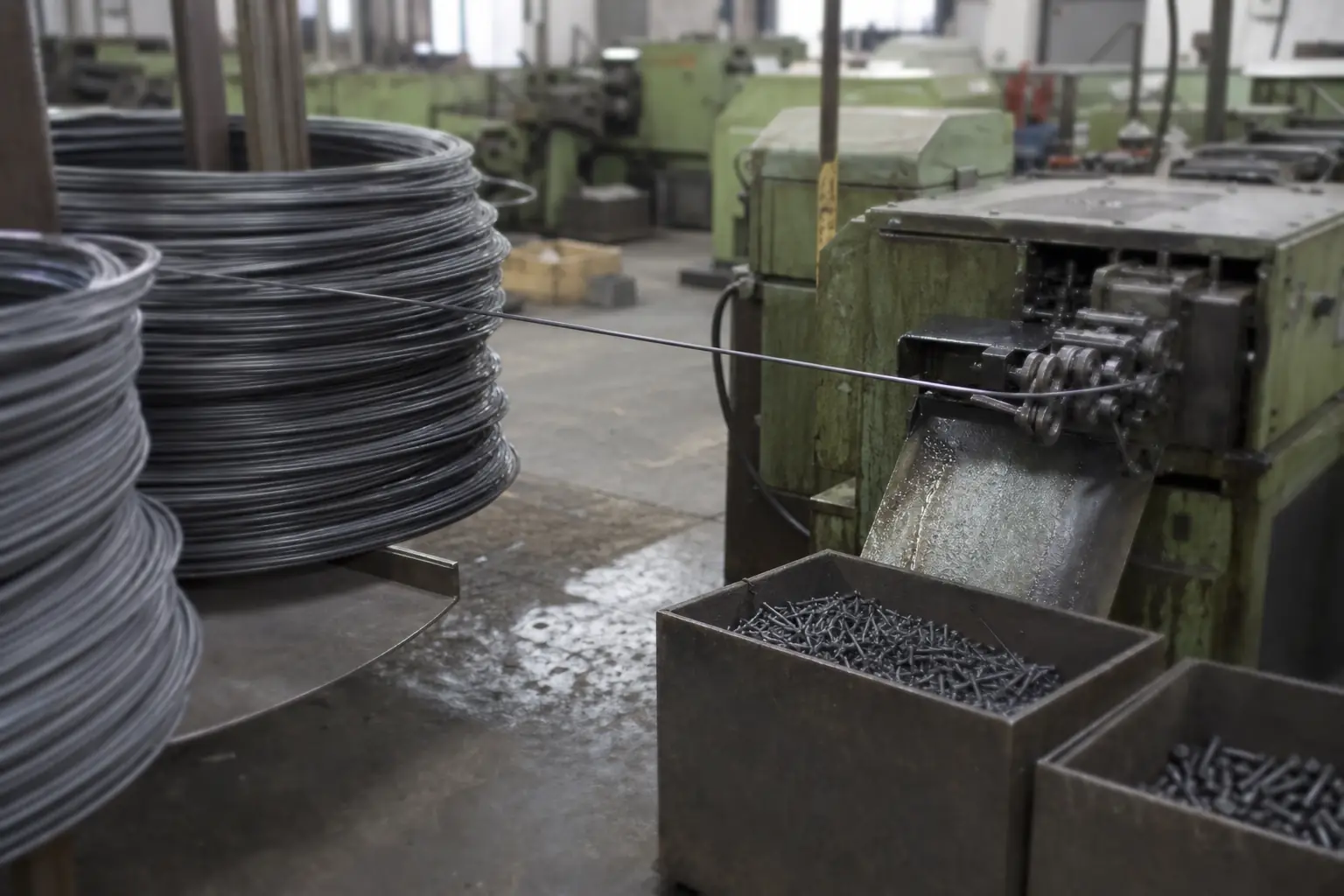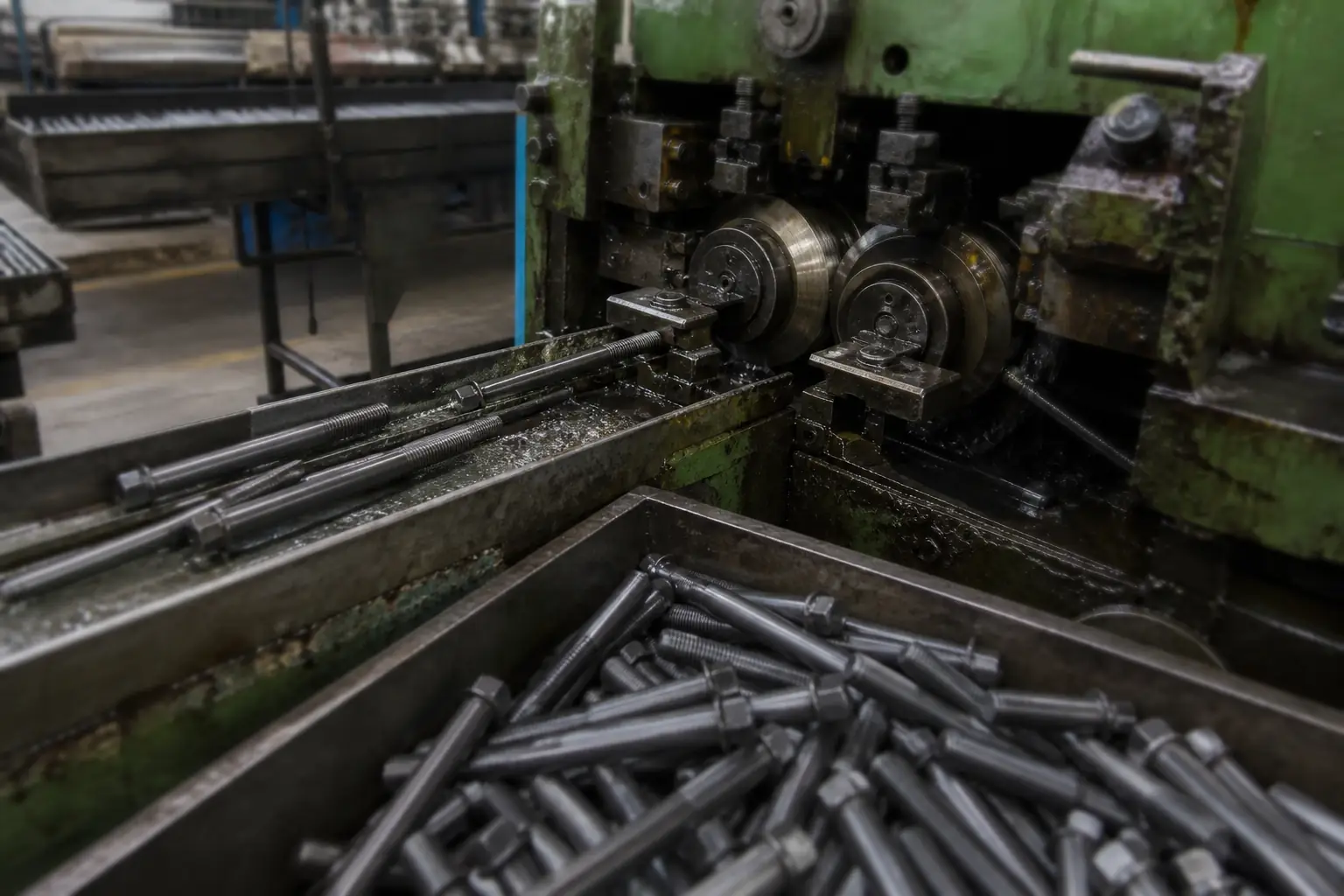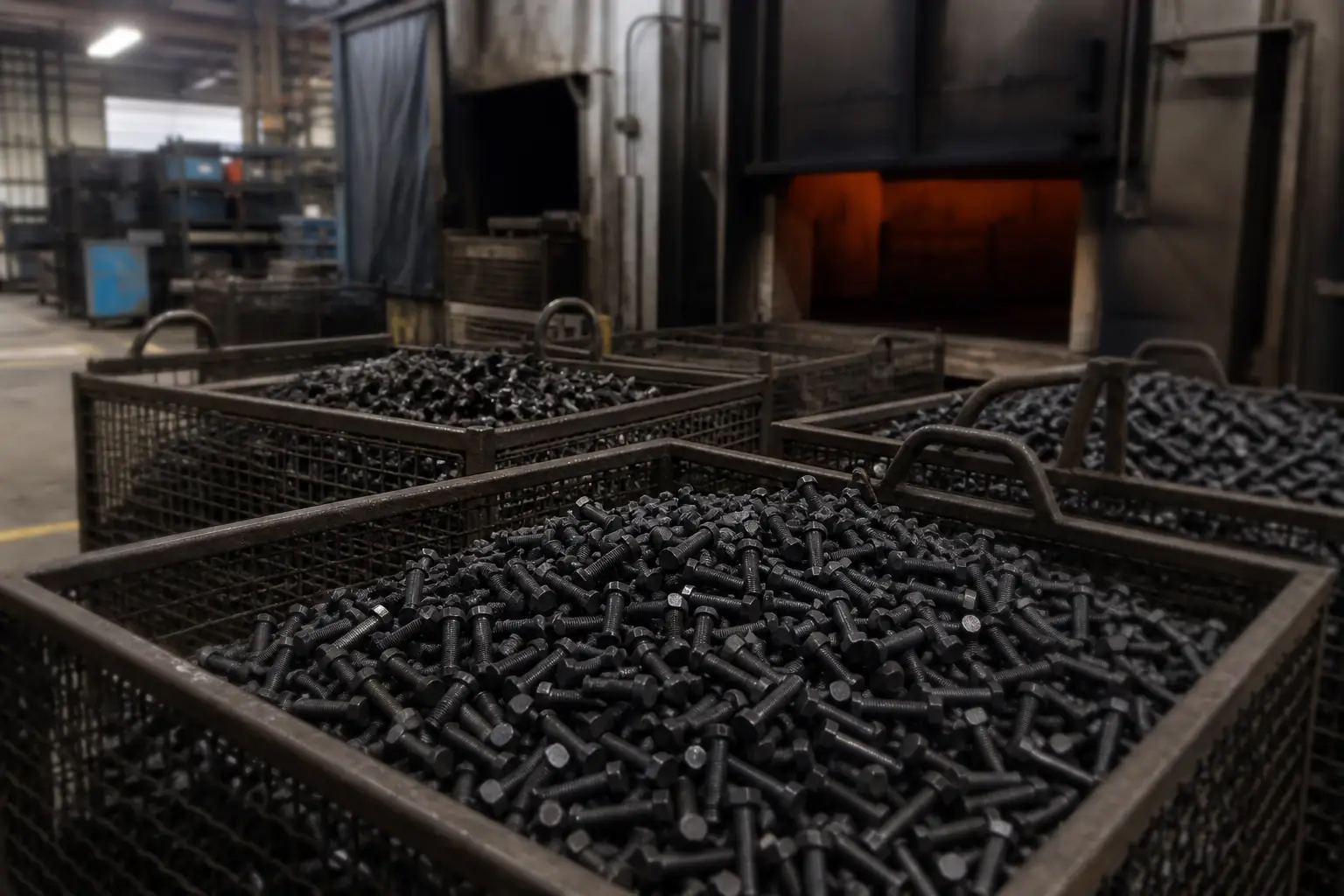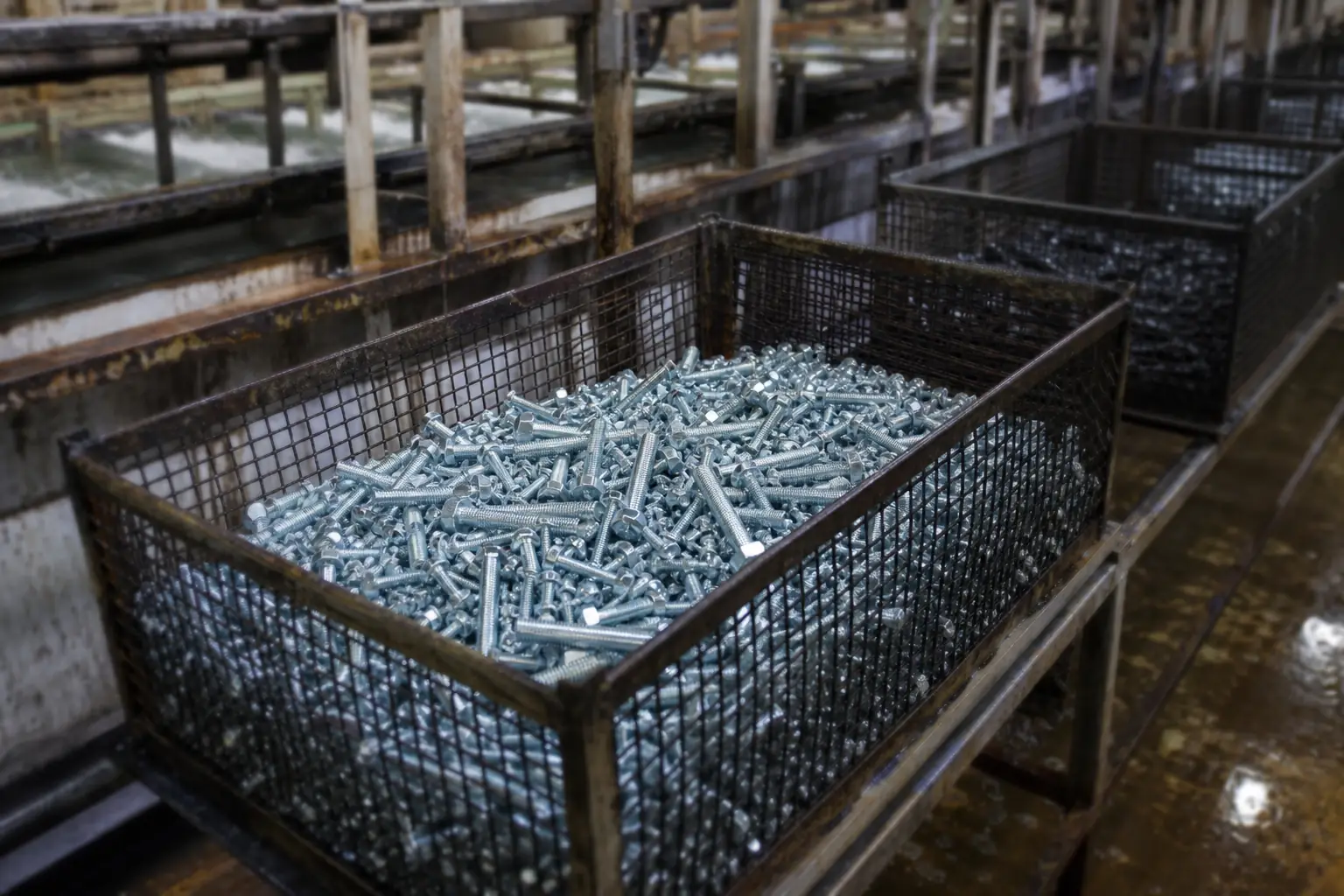
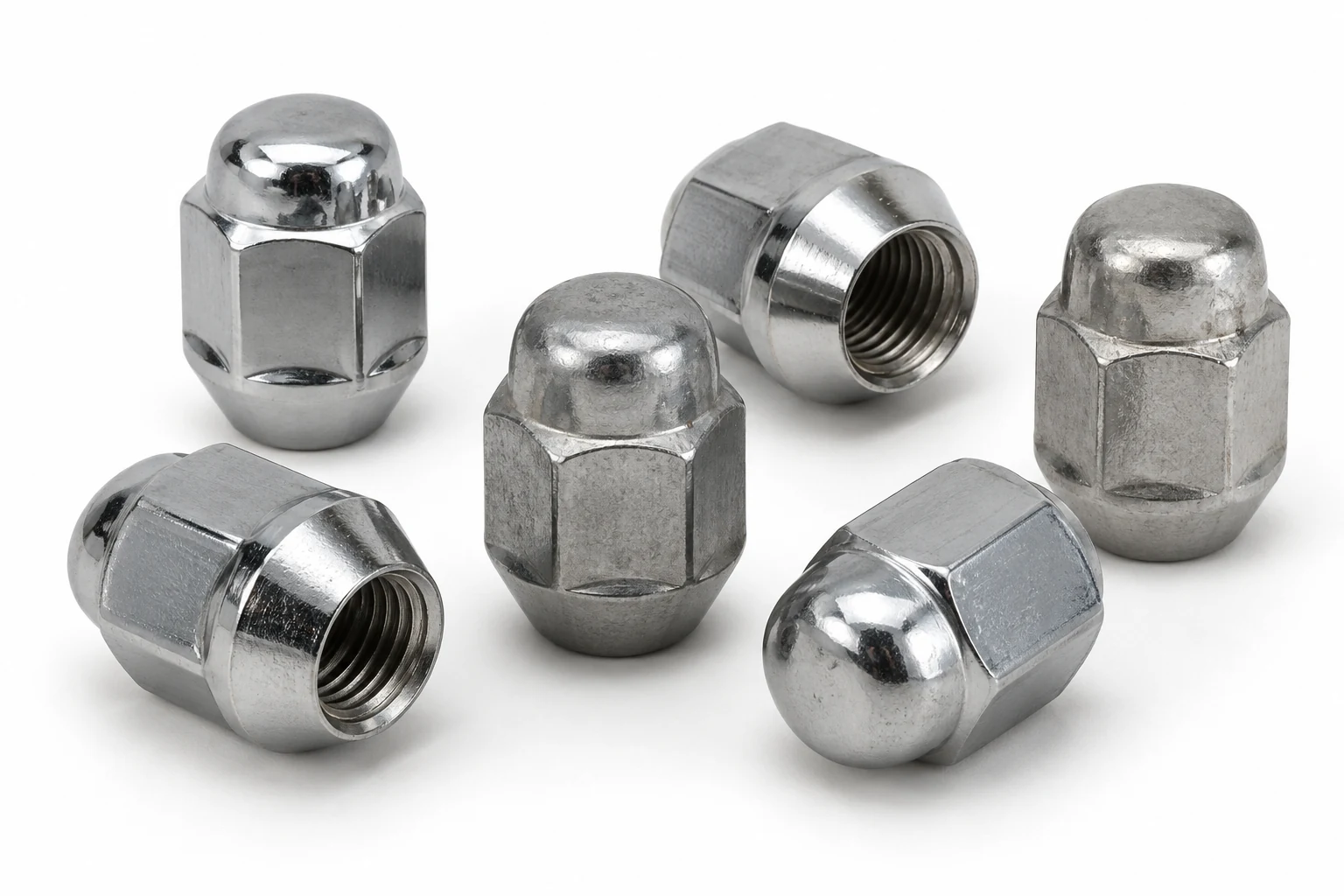
Wheel Lug Nuts are used primarily for mounting a road wheel to a hub, where the seat form has to match the wheel and the joint is torqued dry. This page lists the industries and assemblies where they are specified, the selection criteria that matter for each application, installation practice, and the cases where a different fastener type is the correct choice. Parts are supplied to Trade series (acorn wheel lug nuts). Stocked across roughly M12 to M12, they cover heavy and structural work.
Typical Applications for Wheel Lug Nuts
The most common settings where these are specified:
- Automotive wheel service: Acorn lug nuts clamp a wheel against a conical hub seat.
- Passenger vehicles: M12-1.50 and 21 mm hex examples cover the documented service part.
- Fleet maintenance: Closed ends protect the thread from road debris.
- Wheel repair: Seat angle and overall length are checked against the wheel.
Related Wheel & Lug Nuts products

Rail Fastener Dacromet Hexagon Head Bolt Metro Segment Link Bolt Subway Tunnel Segment Bolt
Hexagon Head · DIN, ANSI, GB, JIS, BSW, GOST
US$0.60 – 6.00MOQ 1,000 pieces

for Mercedes-Benz Parts a 000 990 53 07 a 000 990 10 07 M14*1.5 Hex 17 Lug Bolt Stud for Alloy Wheel
Auto Fasteners · Steel
US$0.24MOQ 5,000 pieces

Wg9112340123 Rear Wheel Bolt M23×130 10.9 Grade Sinotruk HOWO Shacman Heavy Truck Wheel Hub Bolt Assembly
Hexagon Head · DIN, ANSI, JIS, Bsw, GOST
US$0.60 – 17.40MOQ 1 piece

Custom Stainless Steel / Carbon Steel Mini Idel Wheel Bolt Squeegee Stop Bolt Hexagon Socket Head Shoulder Screw
Hexagon Head · Stainless Steel/ Aluminum/ Steel/ Copper or Others
US$0.12 – 0.72MOQ 1,000 pieces

Wheel Studs, Lug Bolts, 65 mm Long & M 12 X 1.5 Steel Lug Bolts, Car Accessories Wheel Hub Screws Compatible with Most Cars
Round Head · DIN, ANSI, GB, JIS, BSW, GOST
US$0.036 – 0.084MOQ 500 pieces
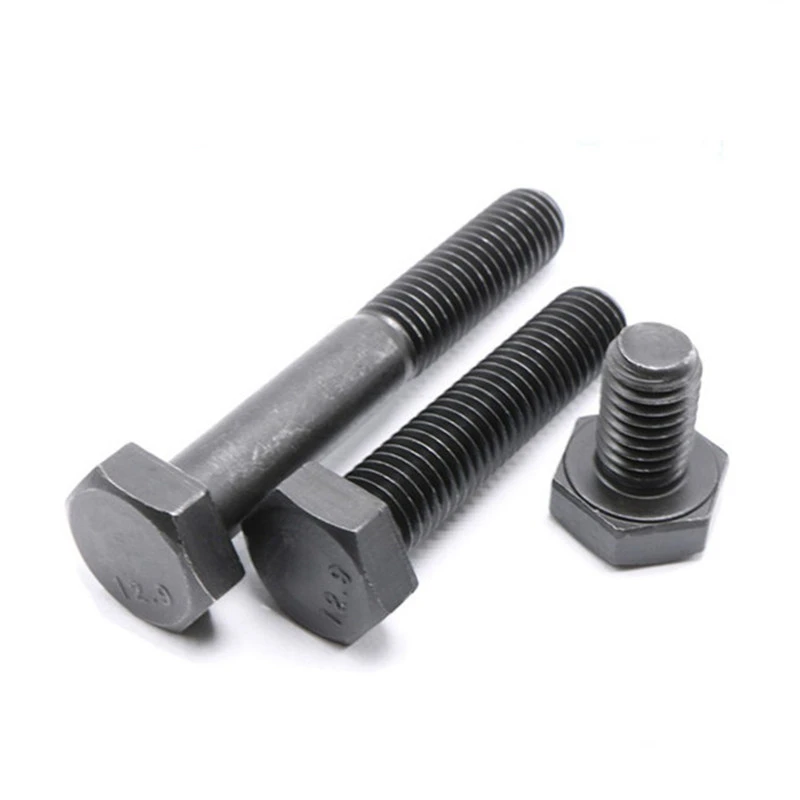
Carbon Steel Grade 8.8 Oval Neck Track Bolt Rail Fish Bolt
GB/T 1346, GB, JIS, ANSI, DIN, BS · Q235, 10b21, Stainless Steel
US$0.48 – 0.72MOQ 100 pieces
View all Wheel, Lug, Hub & Track Bolts → Full product catalog
How to Specify Wheel Lug Nuts for Your Application
- Size: Match the nominal size to the mating thread or hole. This product spans M12–M12; check the full table below for the exact dimensions of each size.
- Locking & grade: Match the strength grade to the bolt, and choose a locking style (nyloc, all-metal, serrated flange) if the joint sees vibration.
- Environment: For damp, coastal or chemical exposure prefer A4/316 stainless or a suitable coating; indoors, plated steel or A2 is usually sufficient.
- Standard: This product is supplied to Trade series (acorn wheel lug nuts). Quoting the standard on your order guarantees interchangeable dimensions between suppliers.
Installation & Assembly Practice
- Run the nut down by hand before applying the wrench to catch cross-threading early.
- Tighten the nut rather than the bolt head where access allows — the torque-to-preload relation is more consistent.
- For locking styles, note that nyloc inserts are single-use in critical joints and lose grip above roughly 120 °C.
Common Selection Mistakes with Wheel Lug Nuts
- Pairing a high-class bolt with a lower-class nut — the nut strips before the bolt reaches proof load; the nut class must meet or exceed the bolt class.
- Using a plain nut with a spring washer in severe vibration instead of a prevailing-torque locking nut.
- Re-using nyloc nuts in critical joints.
Where Wheel Lug Nuts Are Not the Right Choice
Not on their own — they need a matching bolt or stud — and a plain nut is not a substitute for a locking type under heavy vibration.
Custom manufacturing · Made to drawing
Need a wheel lug nuts outside the standard range?
Locking method is specifiable independently of the rest: nylon insert, all-metal deformed thread, serrated flange, or none. Made by cold heading or tapping.
Minimum order from 2,000 pieces; samples within 7 days of drawing approval.